Back to Fruitpedia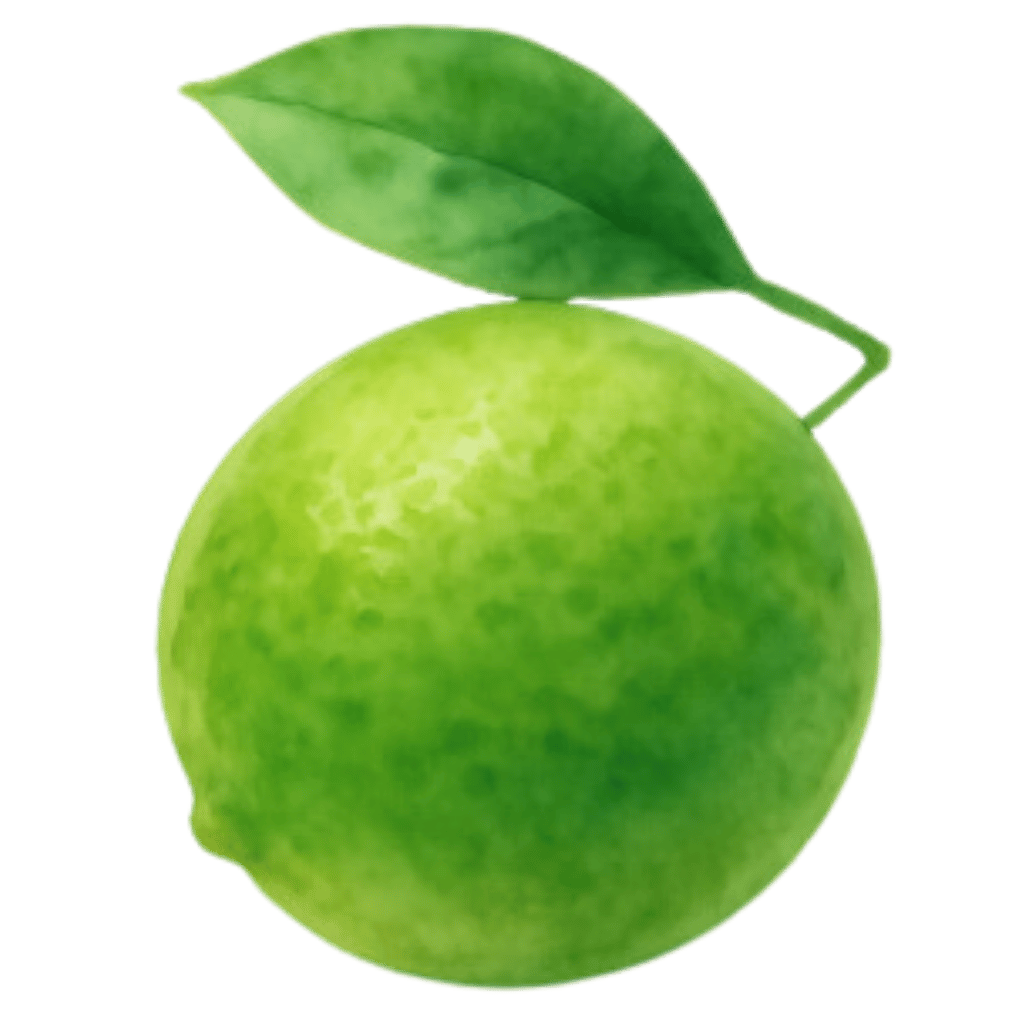
Green lemon
Citrus limonVarieties
Eureka
Lisbon
Verna
Interdonato
Femminello Siracusano
≥6° BrixSfusato Amalfitano
Botanical View
- Folhas simples, alternas, de consistência coriácea, elípticas a longo-ovadas, medindo cerca de 6 a 11 cm de comprimento, com margem serrilhada e pecíolo estreitamente alado. As folhas novas apresentam tonalidade avermelhada, tornando-se verde-claras na maturidade — coloração mais clara que a das folhas da laranjeira.
- Caule lenhoso, com ramos de coloração castanho-clara, muito ramificados, formando copa aberta e arredondada. Os ramos, sobretudo em plantas jovens, apresentam espinhos axilares longos, rígidos e pontiagudos. O hábito de crescimento é ereto a espalhado, podendo alcançar de 3 a 6 m de altura.
- Sistema radicular fasciculado (não pivotante), tipicamente concentrado nas camadas superiores do solo. Em estudos com citros no Nordeste brasileiro, cerca de 80% das raízes de plantas enxertadas sobre limão 'Cravo' distribuem-se entre 0,6 e 0,9 m de profundidade, podendo ser restringido por horizontes coesos característicos dos Latossolos e Neossolos dos Tabuleiros Costeiros. Recomenda-se profundidade efetiva mínima de solo de 1,0 a 1,2 m para permitir bom desenvolvimento radicular.
- Flores solitárias ou reunidas em pequenos cachos axilares, hermafroditas (monóclinas), muito perfumadas e atrativas às abelhas, com pétalas brancas de tonalidade arroxeada/rosada na face externa. Possuem 20 a 40 estames de anteras amarelas, livres, formando um funil ao redor do estigma. Muitas flores são estéreis por aborto do pistilo, e a fertilidade varia consideravelmente entre florações e estações do ano.
- Espécie autocompatível (autofértil): as flores hermafroditas não dependem de polinização cruzada para produzir frutos, embora a polinização cruzada por insetos aumente o vingamento e a produtividade. Os citros, de modo geral, também podem se reproduzir agamicamente por poliembrionia nucelar (formação de embriões a partir de células do nucelo, geneticamente idênticos à planta-mãe); porém, o limoeiro-verdadeiro apresenta grau de poliembrionia reduzido em comparação a outras espécies do gênero, com maior proporção de sementes de origem zigótica (sexuada).
- As abelhas — principalmente Apis mellifera, além de abelhas nativas — são os polinizadores mais ativos e importantes do limoeiro. Como o pólen dos citros é aderente e viscoso, a polinização por abelhas é considerada o meio mais consistente e econômico de assegurar boa produção, sendo especialmente relevante em variedades autoincompatíveis.
- Prefere solos bem drenados, de textura arenosa a franco-arenosa, com profundidade efetiva mínima de 1,0 a 1,2 m. O pH ideal situa-se na faixa ligeiramente ácida, entre aproximadamente 5,5 e 7,5, conforme a fonte consultada. Solos argilosos com declividade superior a 18% ou solos arenosos com mais de 15% de declividade são considerados inadequados ao cultivo, e a planta é sensível ao encharcamento e à má drenagem.
- O consumo hídrico anual dos citros varia entre 600 e 1.200 mm; em pomares irrigados, a demanda gira em torno de 3 mm/dia no verão (podendo atingir 3,2 a 4,7 mm/dia) e cerca de 1,5 mm/dia no inverno. Os períodos mais críticos quanto à disponibilidade de água são a brotação, a floração, o vingamento e a fase inicial de desenvolvimento dos frutos. Sistemas de irrigação localizada (gotejamento e microaspersão) são recomendados por sua maior eficiência, com área molhada correspondendo a 33-67% da área cultivada. A adubação de plantas jovens costuma ser parcelada em aplicações a cada 3-4 meses, aumentando gradualmente conforme a idade da planta.
- A propagação comercial é feita por enxertia (borbulhia) sobre porta-enxertos selecionados por vigor, produtividade e tolerância a estresses bióticos e abióticos — no Brasil, destacam-se o limão 'Cravo' (Citrus limonia) e o limão 'Volkameriano' (Citrus volkameriana), entre outros porta-enxertos indicados pelo Programa de Melhoramento Genético de Citros da EMBRAPA. A propagação por sementes é utilizada principalmente para formação de porta-enxertos, aproveitando mudas de origem nucelar (poliembriônica) por serem geneticamente uniformes e livres de vírus.
- O número de sementes por fruto é altamente variável entre cultivares, influenciado por fatores genéticos e ambientais que afetam a formação e sobrevivência de embriões nucelares e zigóticos. Diferentemente de outras espécies de citros com alto grau de poliembrionia (como certos porta-enxertos), o limoeiro-verdadeiro apresenta proporção reduzida de embriões nucelares, de modo que a progênie obtida por semente tende a apresentar maior variabilidade genética em relação à planta-mãe.
- As principais cultivares do limoeiro-verdadeiro (também chamado limão-siciliano) cultivadas e estudadas no Brasil são 'Eureka' e 'Lisboa', do grupo Siciliano/Femminello; a cultivar 'Verna' destaca-se internacionalmente. É importante distinguir o limão-verdadeiro de outras espécies popularmente chamadas "limão" no Brasil, como a limeira ácida ou limão-galego/-taiti (Citrus aurantiifolia / Citrus × latifolia), de casca fina e verde, e o limão 'Cravo' (Citrus limonia), usado sobretudo como porta-enxerto.
- O limoeiro-verdadeiro tem origem antiga, provavelmente no leste do Himalaia, disseminando-se posteriormente para o Oriente Médio e a bacia do Mediterrâneo, e depois para as Américas com a colonização europeia. Estudos genômicos confirmaram sua origem híbrida a partir do cruzamento entre a cidra (Citrus medica), que contribuiu com cerca de metade do genoma, e a laranja-azeda (Citrus aurantium). No Brasil, a EMBRAPA coordena o Programa de Melhoramento Genético de Citros, responsável pelo fornecimento de material propagativo (borbulhas) com certificação de origem genética e fitossanitária; entre as cultivares historicamente selecionadas para os mercados brasileiro e internacional estão 'Eureka' e 'Lisboa'.