Back to Fruitpedia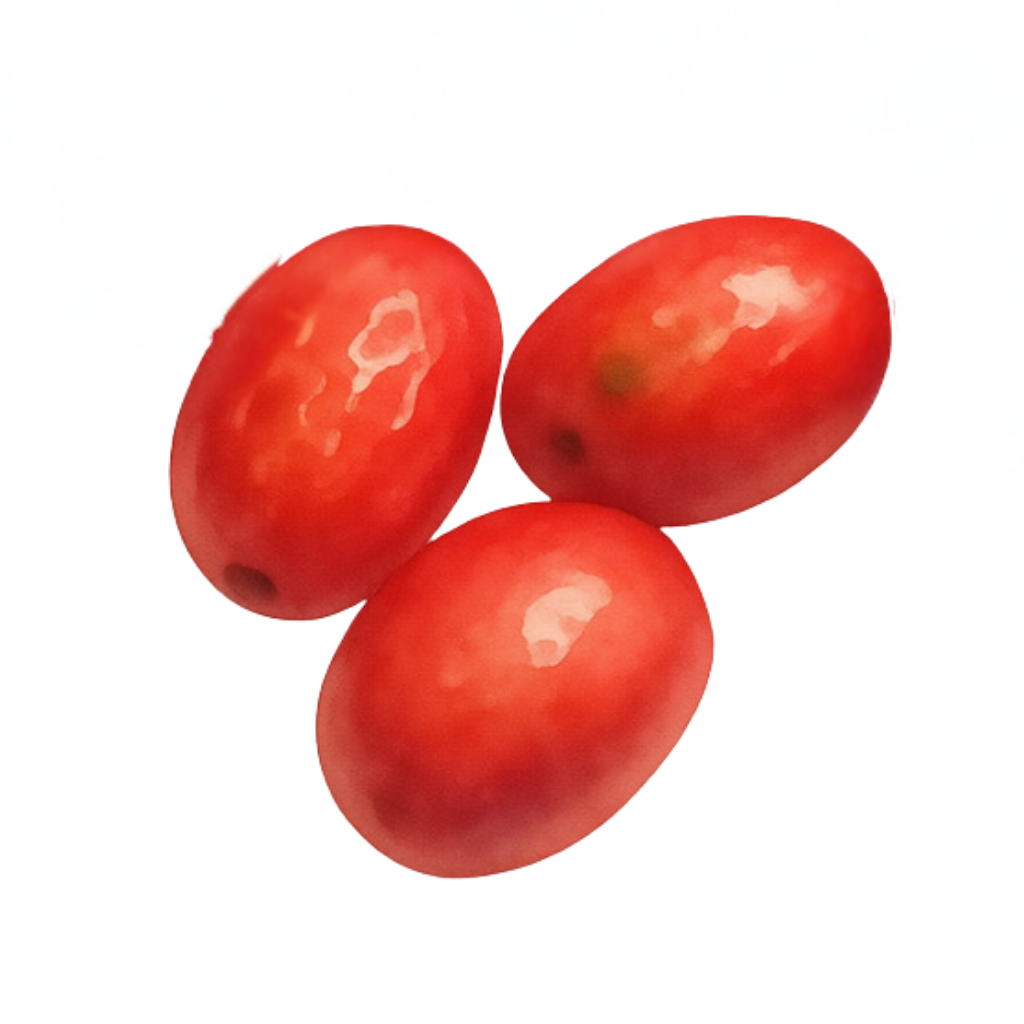
Spicebush Berry
Lindera benzoinVarieties
Xanthocarpa
Rubra
Green Gold
Botanical View
- Leaves are alternate, simple, obovate to elliptic (broadest beyond the middle), roughly 6–15 cm long and 2–6 cm wide, with entire (smooth, untoothed) margins, a cuneate base and an acute to acuminate tip. They are thin/membranous, pinnately veined, dark green above and paler beneath, with the upper surface mostly hairless and the lower surface ranging from glabrous to pubescent. The foliage is strongly aromatic (spicy, citrus-like) when crushed and turns bright yellow in autumn. Petioles are about 10 mm long.
- Young branchlets are slender, glabrous to sparsely pubescent, and aromatic. The bark is relatively smooth to slightly rough and flat, dotted with small, circular, raised lenticels that give the twigs a speckled, roughened texture. Winter buds are stalked; flower-bud color varies by form (green to reddish in some cultivars).
- The species has an extensive, spreading root system capable of vegetative reproduction, sending up root sprouts (suckers) that allow it to form dense colonies, clumps or thickets in favorable moist sites. It resents disturbance and does not transplant well once established, so nursery propagation is usually from seed.
- Flowers are borne in small, dense, nearly stalkless axillary clusters (umbel-like fascicles) along the previous year's twigs, opening before the leaves. Individual flowers are tiny, apetalous and greenish-yellow with a sweet fragrance, each with about six yellow perianth segments (tepals/sepals). The plant is functionally unisexual: male flowers are larger and showier, with prominent stamens, while female flowers are smaller.
- Dioecious—male and female flowers are produced on separate plants, so both a male (pollen source) and one or more female plants are required for the females to set fruit and viable seed. Female plants bear a greater reproductive cost than males, and wild populations are often skewed toward more males than females. Fruit is a red, ellipsoidal, lipid-rich, berry-like drupe about 1 cm long, each containing a single large seed.
- Insect-pollinated by generalist, early-season pollinators. Both male and female flowers produce nectar, attracting small native bees, pollinating flies, and other small insects (including ants) that are active in early spring when few other nectar sources are available.
- Prefers fertile, moist, humus-rich, well-drained soils but is adaptable to loamy sands, medium loams and silt loams. It grows on both acidic and basic (limestone-influenced) soils across a slightly acid to slightly alkaline pH range. In the wild it favors mesic sites—stream banks, low woods understory and wetland margins—from about 0 to 1200 m elevation.
- Grows best with consistently moist soil; it tolerates occasional flooding as well as occasional dryness once established, but benefits from supplemental watering when grown in full sun or during drought. No specific fertilizer requirement is documented—it thrives on naturally fertile, humus-rich woodland soils rather than heavy feeding.
- Chiefly propagated by seed. The cleaned seed is recalcitrant and must not be allowed to dry out or it rapidly loses viability; it can be sown fresh or given about one month warm followed by two to three months of cold, moist stratification to break dormancy. Vegetative propagation is difficult: semi-ripe/softwood cuttings only occasionally root and not in large numbers. Named clones are perpetuated vegetatively because they do not come true from seed.
- Because the species is dioecious and cross-pollinated, seedlings are genetically variable and about half are male, half female (sex cannot be determined until flowering). Fruit color and other traits segregate in seedlings, so distinctive forms (e.g., yellow-fruited plants) are maintained clonally rather than from seed. Seed is short-lived (recalcitrant) and loses viability quickly if dried.
- Few cultivars/forms exist and are rarely offered, largely due to propagation difficulty. Documented selections include f./'Rubra' (a male clone with brick-red flowers and darker red-brown buds; sets no fruit), f./'Xanthocarpa' (yellow to orange-yellow fruit; a wild-occurring form, one plant found at the Arnold Arboretum in 1967), and 'Green Gold' (a male clone with notably large, showy flowers; non-fruiting).
- A wild North American species with essentially no formal breeding program; horticultural forms are chance wild variants or selected clones rather than bred hybrids. It was described by Linnaeus in 1753 as Laurus benzoin (later transferred to Lindera) and was introduced to European cultivation around 1688. Once fairly common in British nurseries, it has since been eclipsed there by showier Asian species such as L. obtusiloba, while remaining more widely grown across North America. Propagation difficulty (poor rooting from cuttings) has limited the development and distribution of cultivars.