Back to Fruitpedia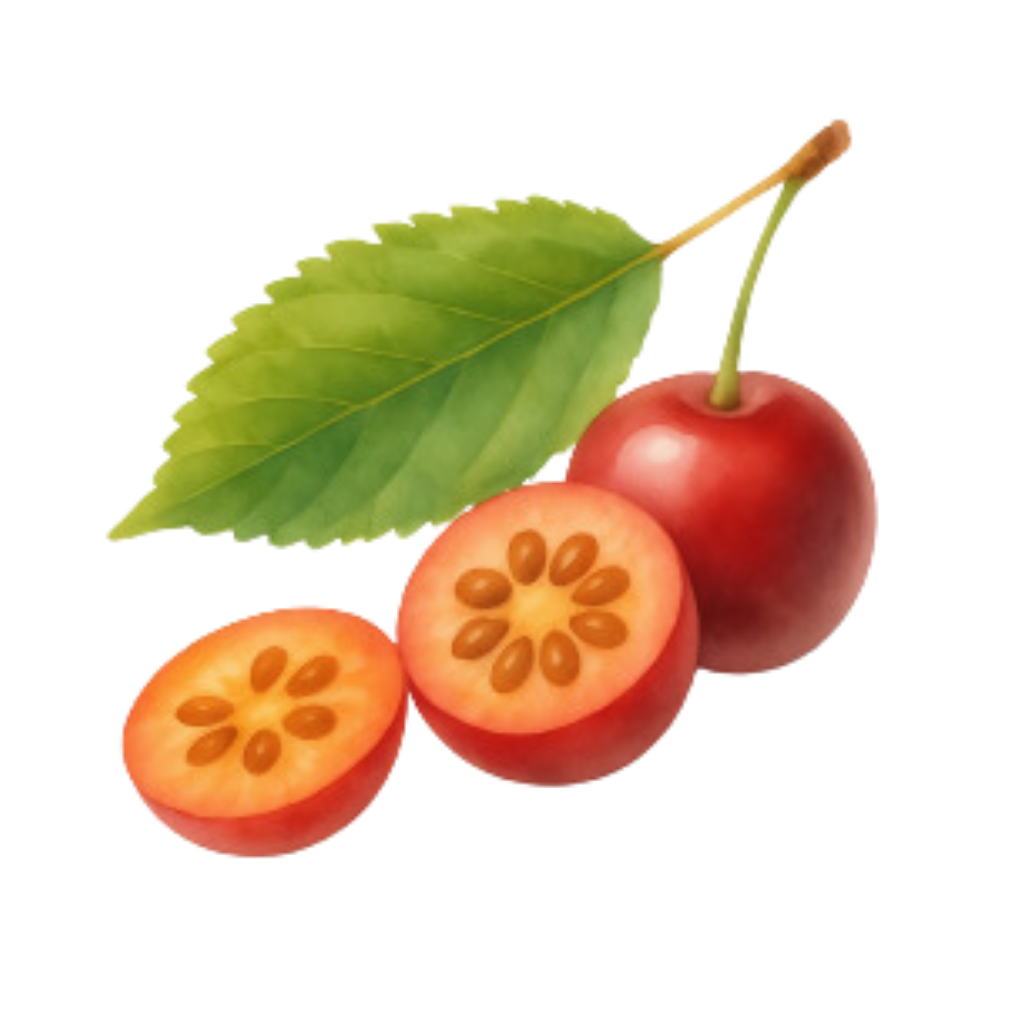
Hackberry
Celtis occidentalisBotanical View
- Leaves are deciduous, simple and alternate (2-ranked), ovate to ovate-lanceolate, about 5-12 cm long and 3-9 cm wide, with a slender tapering tip and a characteristically asymmetrical (unequal, lopsided) base. The margin is sharply serrate over most of the blade but usually entire near the base, and three prominent veins radiate from the leaf base. The upper surface is rough to the touch and dull to medium green, the underside paler and smoother. Petioles are short. Autumn color is an undistinguished light yellow. The rough, oblique-based, 3-veined leaf is a key field character separating hackberry from elms.
- Single, generally straight trunk with symmetrical, open branching; larger limbs often begin well up the bole. The bark is one of the tree's most distinctive features: gray to silvery-gray or light brown, smooth when young but soon developing conspicuous warty, corky ridges and wart-like projections, becoming deeply furrowed and scaly with age. Twigs are slender and zigzag with chambered (not solid) pith. The wood is light yellow, heavy but soft, coarse-grained and not strong, and is prone to decay; it is of relatively low commercial value and used for furniture, boxes and fuel.
- The root system is deep and wide-spreading, with a strong taproot when young and extensive lateral roots; this anchoring and drought-buffering root habit contributes to the tree's tolerance of poor and dry sites and windfirmness. Recorded specimens show lateral roots spreading roughly twice the tree height with moderate depth (for example a 35-year-old tree with maximum lateral root length near 12.6 m and depth about 1.5 m); depth-to-height ratios average about 0.5 and lateral-spread ratios about 2.0. Finer roots are fibrous.
- Flowers are small, greenish and inconspicuous, lacking petals (no corolla), borne on slender drooping pedicels in spring as the leaves emerge. The tree bears three flower forms: staminate (male) flowers clustered toward the base of new growth, and pistillate (female) plus a few perfect (bisexual) flowers borne singly or in small clusters in the leaf axils of the same shoots. Each fertile flower develops into a single round to oblong, fleshy, berry-like drupe about 6-11 mm across, green ripening to orange-red then dark purple, with thin sweet edible flesh over a single hard stone.
- Polygamo-monoecious: individual trees carry male, female and a few perfect flowers on the same plant, so a single tree can self-fruit. Fruits are single-seeded drupes; seeds are the main means of natural regeneration. Trees typically begin bearing seed at about 15 years of age and produce good crops most years.
- Primarily wind-pollinated, consistent with the small, greenish, petal-less spring flowers; pollen is shed as the leaves expand. Bees and other small insects may visit the flowers opportunistically, but wind is the principal pollen vector. Seed (fruit) dispersal, by contrast, is largely biotic: the drupes are eaten and spread by many birds (robins, cedar waxwings, mockingbirds, woodpeckers, quail) and mammals, which carry seed well away from the parent tree.
- Grows best in deep, fertile, moist but well-drained soils, yet is highly tolerant of poor conditions: sandy, loamy, gravelly, rocky and heavy clay soils, and periodic flooding. It is characteristically associated with limestone and alkaline soils (optimum pH around 7.2) but tolerates acidic soils down to about pH 5.0. It withstands drought, compaction and urban conditions, though growth is slow on infertile sites.
- A low-maintenance tree needing little supplemental fertilization or irrigation once established, owing to its deep roots and drought tolerance. Young nursery and landscape trees benefit from regular watering during the first seasons to establish, and moderate fertility and moisture promote faster growth and denser canopy; established specimens tolerate drought, poor soils and neglect. Excess fertility is generally unnecessary. (Specific commercial fertilizer/irrigation regimes are not well documented for this species and are largely general nursery practice.)
- Propagated mainly by seed. Clean the pulp from ripe drupes; seeds germinate best after cold-moist stratification (roughly 60-90 days), which can raise germination markedly, and are sown shallowly (about 1 cm or less). The brittle seed coat is easily damaged by mechanical handling. Named cultivars are propagated vegetatively, by softwood/rooted stem cuttings or by grafting/budding onto hackberry seedling understock, to preserve their form and traits.
- Seedling-grown trees show natural variation in habit, vigor, foliage and susceptibility to witches'-broom, which is why selected clonal cultivars are used for uniform landscape stock. Seed is relatively short-lived in the soil seed bank: viability declines fairly quickly (on the order of ~34% germination after one year and ~20% after two years in some studies), so fresh, properly stratified seed germinates best.
- Several landscape cultivars have been selected, chiefly for uniform crown form and resistance to witches'-broom: 'Prairie Pride' (compact, uniform oval crown, thick leathery foliage, witches'-broom resistant); 'Chicagoland' (upright-oval, strong central leader, narrower than the species); 'Magnifica' (broadly oval to vase-shaped; a hybrid selection); and Ultra ('Ulzam', rounded habit with blue-green foliage). These are propagated vegetatively to preserve their characteristics.
- Celtis occidentalis was described by Carl Linnaeus in Species Plantarum (1753). It has no significant history of fruit or agricultural breeding; selection has been limited to horticulture, where nurseries have chosen and clonally propagated superior landscape forms (for example 'Prairie Pride', 'Chicagoland', 'Magnifica' and 'Ulzam'/Ultra) mainly for uniform crown shape and resistance to witches'-broom during the 20th century. It remains essentially a wild, unimproved species valued as a resilient native shade and street tree rather than a bred crop.