Back to Fruitpedia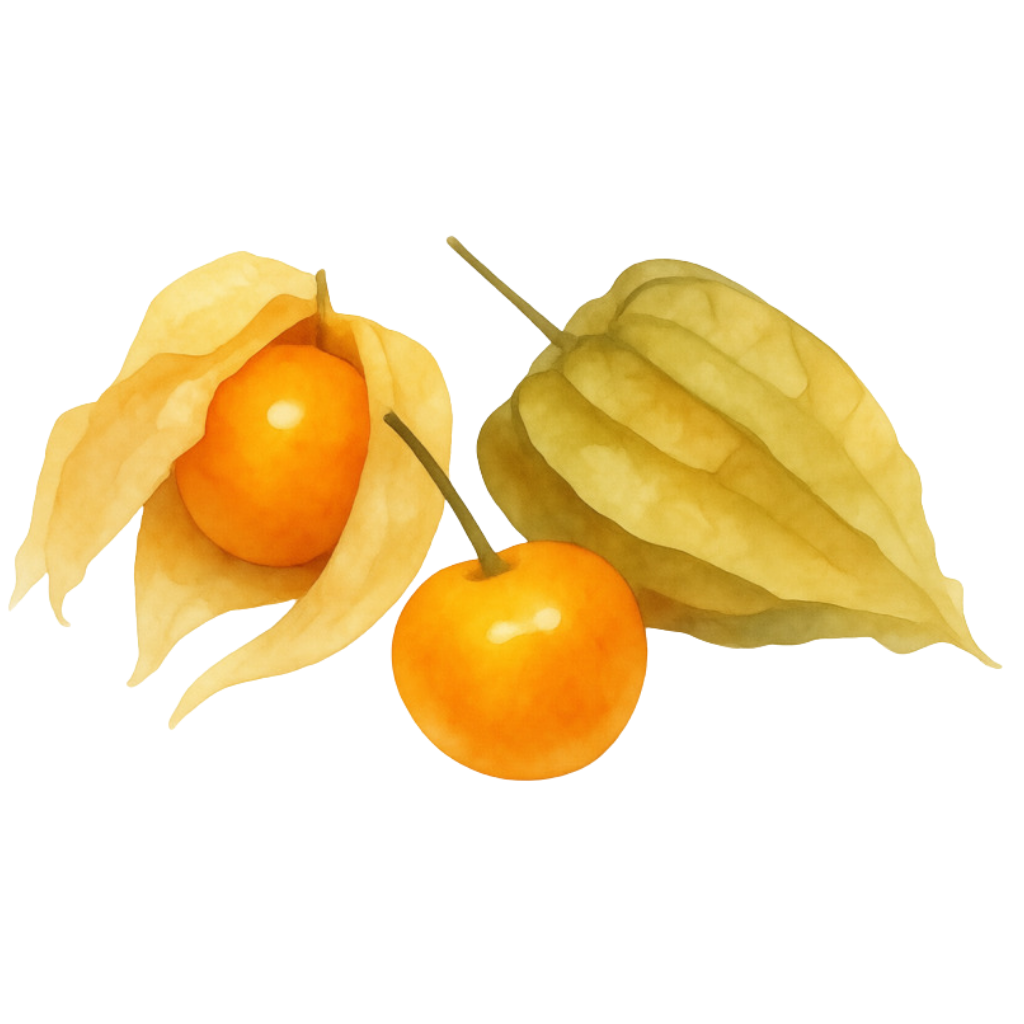
Clammy Ground Cherry
Physalis heterophyllaBotanical View
- Leaves are alternate and petiolate (petioles up to ~1.5 cm), broadly ovate to cordate, roughly 6-11 cm (up to ~4 in) long and to ~3 in wide, with a rounded to heart-shaped base and a pointed tip. Margins are coarsely, irregularly toothed and wavy (undulate). Both surfaces are whitish yellow-green and soft, densely covered with fine white hairs, some of which are glandular, contributing to the plant's sticky feel. Leaf texture and toothing vary among the recognized subspecies.
- Stems are round, erect when young but often becoming decumbent (sprawling) once in fruit, 30-75 cm tall and branching frequently. They are densely glandular-pubescent, covered with short sticky glandular hairs mixed with longer nonglandular white hairs.
- The plant is a rhizomatous perennial with thick, deep, fleshy rhizomes that run horizontally and spread the plant vegetatively into colonies. Lateral roots typically lie about 2-4 inches below the soil surface and can extend 4 feet or more, enabling aggressive clonal spread.
- The inflorescence is simple: flowers are borne solitarily (one per node), arising and drooping from the leaf axils rather than in clusters. Each flower is a spreading tubular to funnel-form (bell-shaped) corolla up to ~1.5-2.5 cm across, pale yellow with five very shallow lobes and five brownish-purple splotches near the throat, five yellow anthers on purple filaments, and a hairy calyx with triangular teeth that enlarges around the developing fruit.
- Flowers are perfect (hermaphroditic), bearing both stamens and pistil, and are insect-pollinated, favoring outcrossing. Members of the genus Physalis are generally self-incompatible (gametophytic, S-RNase-based), so cross-pollination is typically required for seed set; the species also reproduces clonally via spreading rhizomes. The precise breeding system for P. heterophylla specifically is not well documented.
- Pollination is chiefly by short-tongued bees that collect pollen or suck nectar from the nodding flowers, including plasterer/cellophane bees (Colletes) and halictid sweat bees.
- Prefers well-drained loam, sand, gravel, or rocky soils in full to partial sun, and slightly moist to dry conditions. It tolerates poor, sterile, low-fertility soils and thrives on disturbed ground; a slightly acidic to neutral pH (about 6.0-7.5) is favorable. Typical habitats are dry to mesic prairies, gravel hills, sandy or rocky ground, fields, and roadsides.
- A low-input, drought-tolerant plant that needs little supplemental fertilizer or water once established and does well on nutrient-poor soils. In cultivation, moderate, consistent moisture (soil kept moist but not soggy, with good drainage) and only light, balanced fertilization are recommended; overfeeding is unnecessary and it naturally thrives in lean soils.
- Propagates readily both by seed and vegetatively by rhizomes; established plants spread through horizontal rhizomes and can also be increased by rhizome/root division. Seeds germinate from the numerous seeds contained in each husked berry.
- Each spherical berry contains numerous small, light-brown, elliptical, granular (finely pitted) seeds. The species itself is morphologically variable, with about four recognized subspecies/varieties differing mainly in leaf texture and margin toothing, indicating notable infraspecific variation.
- Espécie silvestre, sem cultivares ornamentais ou comerciais registradas. São reconhecidas quatro variedades/subespécies botânicas (incluindo a var. heterophylla, típica), diferenciadas principalmente por características das folhas.
- This is a wild native species with no record of domestication or formal cultivar breeding, unlike its cultivated relatives the tomatillo and cape gooseberry; it is grown, when at all, as a foraged/native plant rather than an improved crop.