Back to Fruitpedia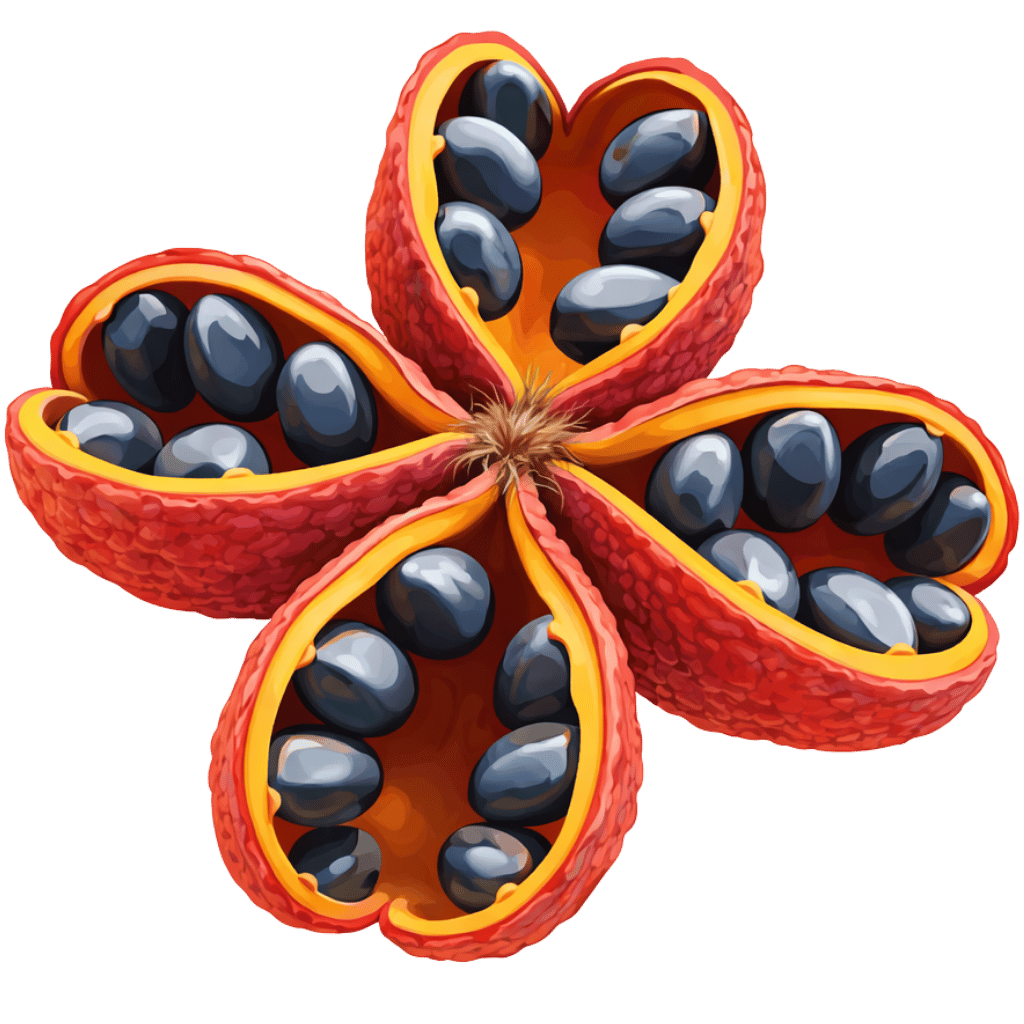
Chicha nut
Sterculia chichaBotanical View
- Simple, alternate leaves that are hard and rough (scabrous) on the upper surface and tomentose (hairy) beneath, typically three-lobed (trilobate), occasionally five-lobed (pentalobate); deciduous.
- Erect, straight, cylindrical trunk, 40-60 cm in diameter, covered by thin, smooth, grayish-brown bark that lacks fissures and does not peel/scale.
- Develops prominent basal buttress roots (sapopemas), comparable in form to those of Ceiba pentandra (sumaúma), which anchor the tree in the shallow soils of the Atlantic Forest.
- Flowers are borne in racemes.
- Functionally monoecious: individual trees bear both staminate (male) and bisexual/pistillate flowers. Flowers are apetalous (no true petals) and monochlamydeous (a single perianth whorl, the calyx), yellow on the outside with a red interior.
- Entomophilous (insect-pollinated): flowers are scented and attract bees and other Hymenoptera as well as flies. In Sterculia apetala — the taxon under which Kew POWO currently subsumes S. chicha — hummingbirds have also been recorded visiting flowers in parts of the species' range (per CABI Compendium).
- "" (not documented in the sources reviewed for this species).
- "" (not documented in the sources reviewed for this species).
- Propagated from seed, as is typical for the genus Sterculia; detailed, species-specific germination or nursery protocols for S. chicha were not found in the sources reviewed.
- Fruits are woody, heavy, reddish dehiscent capsules that split open to reveal black, edible seeds ("castanhas"); dispersal is zoochorous, with large frugivorous/granivorous birds (e.g., toucans, Ramphastos spp., reported for the closely related S. apetala) implicated as dispersers. Quantitative data on seed/seedling variability specific to S. chicha were not found.
- "" — no named cultivars are documented for this species in the sources reviewed; it is used only as the wild type.
- "" (unknown/not documented). Sterculia chicha is a wild Atlantic Forest tree with no recorded formal breeding or cultivar-selection program; where it is propagated, it is grown from wild-collected seed for native-species reforestation and urban/landscape planting rather than orchard-style cultivation.