Back to Fruitpedia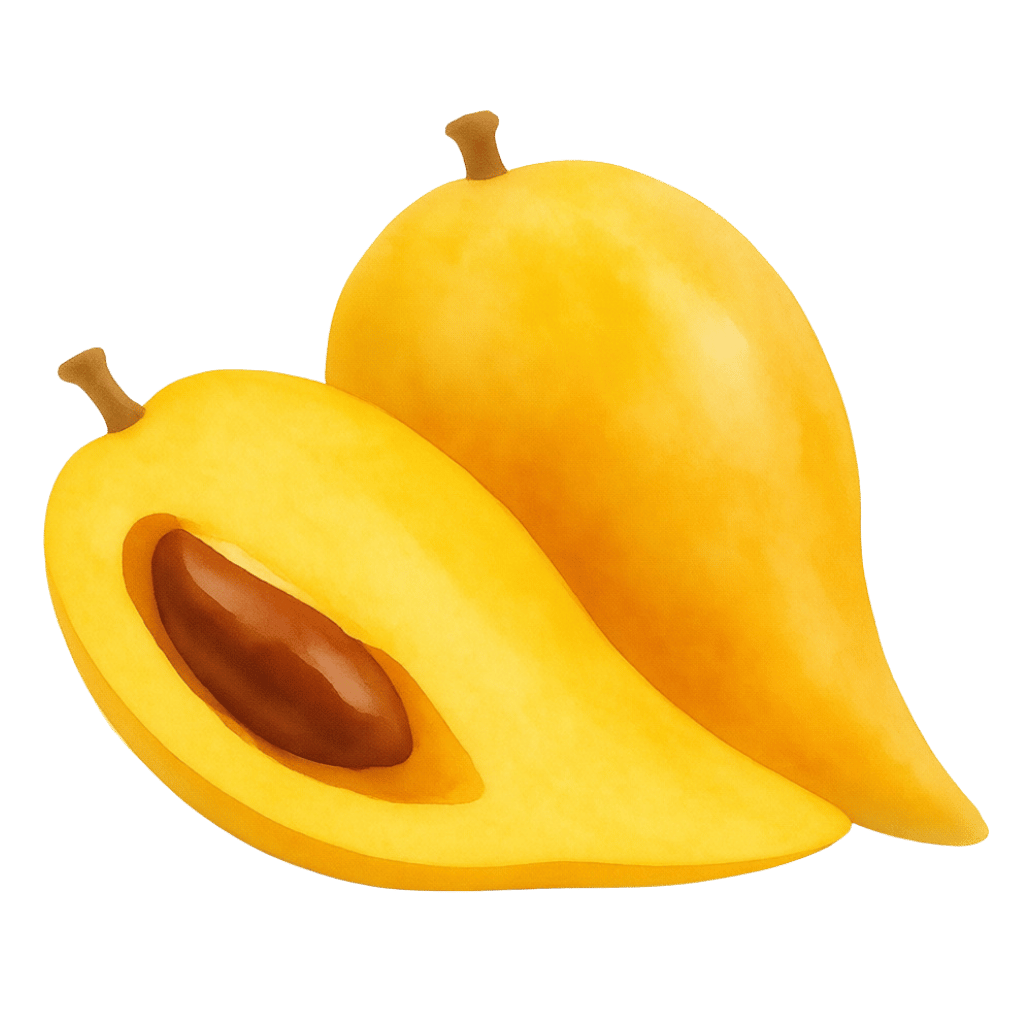
Canistel
Pouteria campechianaVarieties
Trompo
23.8–25.3° BrixOro
Bruce
Fairchild #1
Fitzpatrick
Ross
Botanical View
- Evergreen, alternate, clustered (whorled-appearing) at the tips of branches. Leaves are relatively thin, glossy bright green, obovate-elliptic to oblanceolate or lanceolate-oblong, tapering to a bluntly pointed apex, 5-25 cm (2-10 in) long by 2.5-8 cm (1-3 in) wide, on short-to-long petioles.
- Trunk erect, 25-90 cm in diameter depending on age and growing conditions; bark brown, finely ribbed/furrowed, about 4-5 mm thick, exuding abundant white, gummy latex when cut. Young branchlets are velvety brown. Tree height ranges from about 6-8 m in pruned dooryard/orchard trees up to 27-30 m in unpruned wild specimens.
- ""
- Flowers are fragrant and bisexual (perfect), borne solitary or in small clusters/fascicles in the leaf axils or at leafless nodes on slender pedicels. Each flower is small (roughly 8-11 mm long), with 5 sepals and a cream-colored, silky-hairy, bell-shaped corolla with 5(-6) lobes, 5 stamens, and a single ovary.
- Flowers are hermaphroditic (perfect, bisexual) and insect-pollinated. Fruit set is regularly reported on isolated single dooryard trees, which is consistent with functional self-compatibility, but no controlled self- versus cross-pollination studies specific to this species were located; other genera in Sapotaceae include both self-compatible and self-incompatible taxa, so the breeding system has not been rigorously confirmed for this species.
- University of Florida IFAS Extension states only that the flowers "are pollinated by insects"; no source consulted identified specific pollinator taxa (e.g., particular bee species) for this species.
- Tolerant of a wide range of well-drained soil types, including calcareous, lateritic, acid-sandy, heavy clay, and both alkaline and acid soils. Growth is best in deep, fertile, well-drained soil, but trees are reportedly more fruitful (many smaller fruits) on shallower or less fertile soils, while fertile soils tend to produce fewer, larger fruits. Trees are moderately flood-tolerant, surviving several days of waterlogged or flooded soil with reduced growth and production, but poorly drained, constantly wet soil favors Pythium root rot.
- Young trees are fertilized every 1-2 months in the first year (starting at about 114 g/0.25 lb per application and increasing to about 454 g/1 lb), then 3-4 times per year thereafter in amounts scaled to tree size (not exceeding about 9 kg/20 lb per tree per year). Recommended analyses are roughly 6-10% N, 6-10% P2O5, 6-10% K2O and 4-6% Mg for young trees, shifting to higher potash (9-15%) and lower phosphate (2-4%) for bearing trees (e.g., 6-6-6-2 or 8-3-9-2 formulations). Micronutrient sprays of copper, zinc, manganese and boron are recommended 3-4 times a year for the first 4-5 years, with iron chelate or ferrous sulfate applied as needed to correct chlorosis depending on soil pH. Newly planted trees are watered at planting and every other day for about a week, then 1-2 times weekly for a couple of months; young trees (first 3 years) are watered twice weekly during dry spells of 5 or more days; mature trees (4+ years) benefit from irrigation during prolonged drought, especially through bloom and fruit development, while reduced irrigation in late summer/early fall is used to help slow growth and promote flowering.
- Propagated by seed and by vegetative methods. Seeds lose viability quickly and should be sown within a few days of removal from the fruit; decorticated seeds germinate in about 2 weeks, while intact seeds may take 1 month to 3-5 months. Seedling trees begin fruiting in about 3-6 years and are highly variable in fruit and flowering characteristics. Superior selections are propagated vegetatively by side-veneer grafting, cleft grafting or patch budding onto seedling rootstock, which fruit sooner (about 2-3 years); air-layering (marcottage) is possible but uncommon.
- Each fruit contains 1-5 (commonly 1-4) hard, glossy, chestnut-brown, near-oval to oblong-oval freestone seeds, about 2-5.3 cm long and 1.25-3.2 cm wide. Seedling (sexually propagated) progeny show considerable variability in time of flowering and fruiting, fruit shape (round, oval, ovoid or spindle-shaped), size, seed number, flesh moisture/texture (dry-mealy to moist-smooth) and degree of musky flavor -- variability that has driven selection of named, vegetatively propagated cultivars rather than reliance on seed-grown trees.
- No internationally standardized cultivar registry exists. Named Florida selections (evaluated by University of Florida IFAS and originating largely from grower/collector selection, including work associated with Fairchild Tropical Garden and grower John G. DuPuis, Jr.) include 'Bruce', 'Fairchild #1', 'Fairchild #2', 'Fitzpatrick', 'Keisau', 'Oro', 'Ross', 'Trompo', 'USDA 1', 'Aurea' and 'DuPuis'. In the Philippines, 'Saludo' is a large-fruited, few-seeded selection associated with germplasm work at the Institute of Plant Breeding, University of the Philippines Los Baños.
- No formal breeding program produced the cultivars grown today; they arose from selection among naturally variable seedlings. Julia Morton records that a spindle-shaped fruit form was the common strain in the Bahamas since at least the 1920s, a rounder, broader-fruited form appeared in specialty gardens in the 1940s, and larger-fruited types were introduced from Florida in the 1950s. In Florida, growers selected trees for earliness, mild aroma, moist flesh, and reduced muskiness, yielding named clones such as 'Bruce', 'Fairchild #1', 'Fairchild #2', 'Fitzpatrick', 'Keisau', 'Oro', 'Ross', 'Trompo' and 'USDA 1', maintained/evaluated by University of Florida IFAS and Fairchild Tropical Garden. Per the PROSEA (Plant Resources of South-East Asia) account, the species was introduced to the Philippines around 1915 (from semi-naturalized stock in Cuba) and subsequently to Taiwan from the Philippines in 1929; the Institute of Plant Breeding at the University of the Philippines Los Baños has maintained germplasm and is associated with the 'Saludo' selection. Brazilian sources note the crop's introduction to Brazil around 1985 through EMBRAPA in partnership with UNESP, after which it gained commercial value there.