Back to Fruitpedia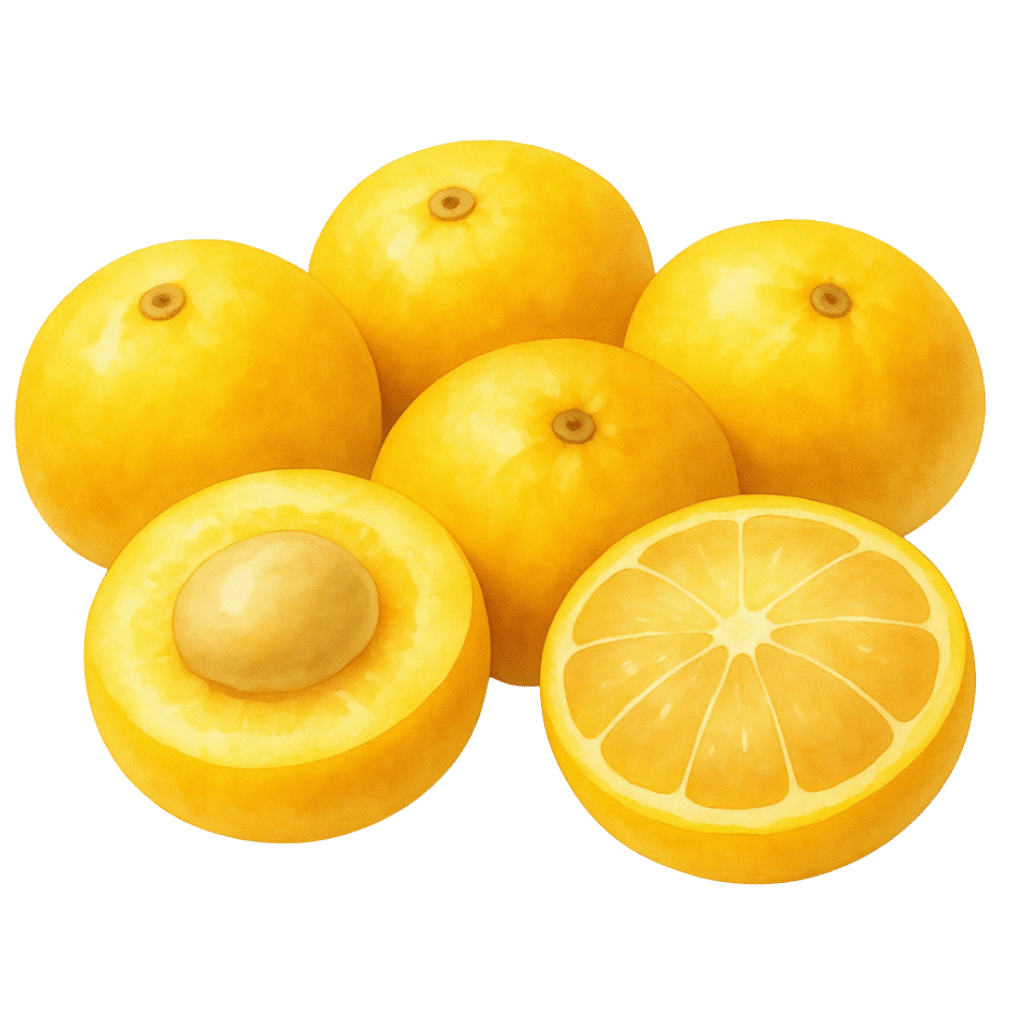
Cabeludinha
Myrciaria glaziovianaBotanical View
- Leaves opposite, simple, lanceolate, dark green and discolorous (paler beneath), glabrous, glossy and slightly coriaceous (leathery), 6-11 cm long, borne on very short petioles; margins revolute (curved downward); midrib (primary vein) prominent on the abaxial (lower) surface.
- Shrub to small tree with a short, often twisted trunk up to about 20 cm in diameter, covered in irregularly fissured bark; canopy dense, compact and low-branching.
- No species-specific description of the root system was found in the sources consulted.
- Inflorescences axillary and sessile, borne in small clusters/fascicles on new twigs, typically produced from autumn into winter; the numerous conspicuous white stamens of the flower clusters are visually dominant and are the origin of several Portuguese vernacular names.
- Flowers are reported as hermaphroditic (perfect) and self-fertile.
- Not documented specifically for M. glazioviana in the sources reviewed. Myrtaceae with this white, stamen-rich flower morphology (including congeneric Myrciaria/Plinia jaboticaba-type species) are typically bee-pollinated, chiefly by Apidae (e.g., Meliponini/stingless bees and Bombini), but a species-specific pollination study for M. glazioviana was not located.
- Prefers rocky-but-moist, fertile, organic-matter-rich soils with good drainage; found naturally on moist forested slopes, often near watercourses.
- Requires consistent soil moisture throughout the year; performs best with regular irrigation, particularly through flowering and fruit set. General cultivation guidance for the species recommends fertilization with organic matter and macro/micronutrients (including potassium and boron) to support flowering, but no peer-reviewed fertilization trial specific to this species was found.
- Propagated by seed and by grafting. Seed is recalcitrant and short-lived, so it is sown fresh immediately after extraction from the fruit, in semi-shaded nursery beds; germination is reported to take roughly 20-100 days depending on temperature and conditions. A peer-reviewed nursery study (Rodriguésia journal) found germination increased linearly with increasing shade up to 92%, while seedling vigor (shoot length, root/total dry mass, Dickson Quality Index) peaked at approximately 47-64% shade (optimum near ~50-52%), recommending about 50% shade cloth for nursery production. Grafting onto vigorous same-species or closely related Plinia/Myrciaria rootstock is used by growers to shorten time to fruiting (about 2-3 years for grafted plants versus 3-5 years from seed).
- Seeds are recalcitrant, viable only briefly and highly sensitive to desiccation; the same germination study found seeds appear insensitive to light per se but strongly responsive to substrate moisture (which shading helps maintain), producing a linear rise in germination percentage with increasing shade. Fruits typically contain 1-2 relatively large seeds.
- No formally registered/scientifically described cultivars were found. Brazilian nurseries and fruit collectors informally distinguish grower-selected variants by trade names, including "Cabeludinha-da-Cruz" (fruit skin marked with a cross-like pattern, reportedly superior flavor) and "Cabeludão" (larger fruit, broader/shorter leaves); these are horticultural trade designations rather than formally described cultivars.
- No formal breeding program or registered cultivar development was found; the species remains essentially wild-collected/semi-domesticated, propagated from wild or garden seed stock. Informal on-farm and nursery selection among Brazilian growers and collectors has yielded named horticultural variants (see cultivars) but no documented, scientifically tracked breeding lineage.