Back to Fruitpedia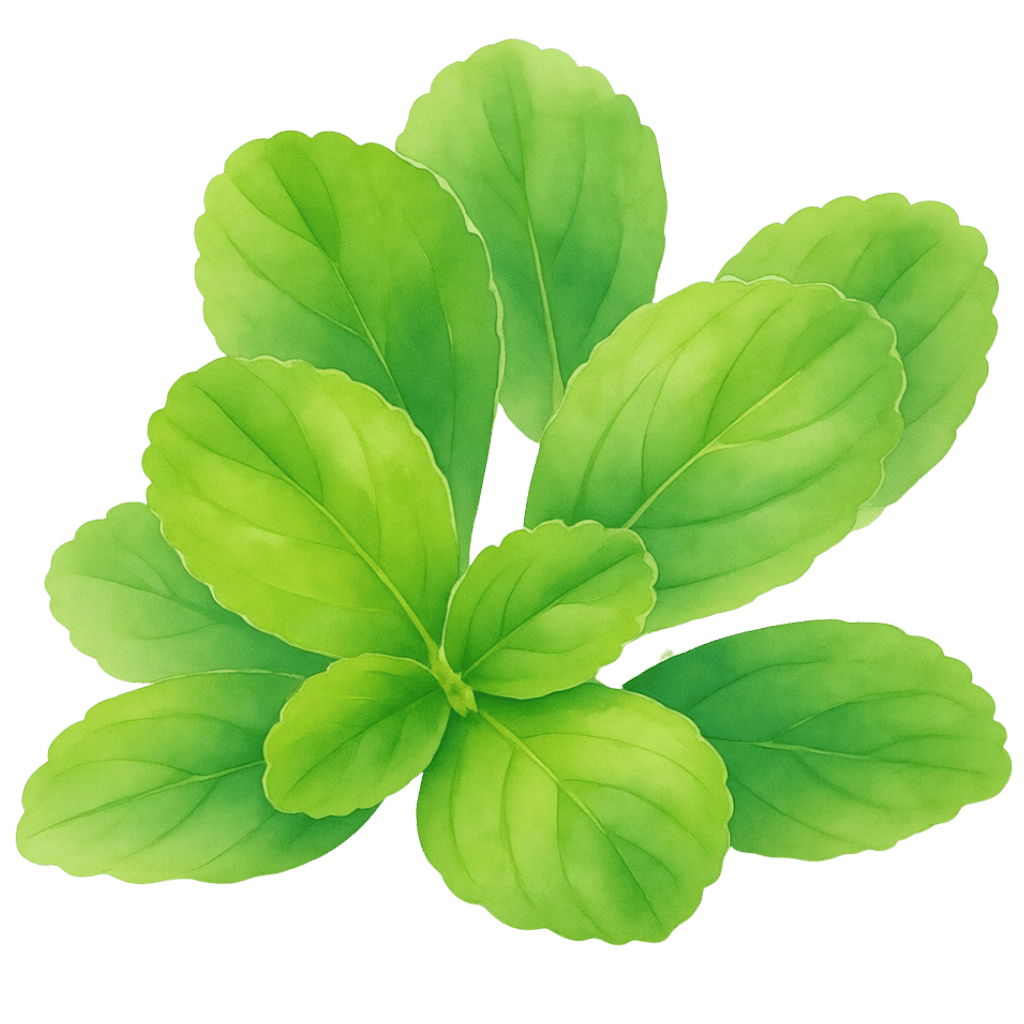
Boldo
Peumus boldusBotanical View
- Leaves are opposite, simple, evergreen and leathery (coriaceous), ovate to elliptic, about 2.5-5 cm long by 2-2.5 cm wide, with entire, revolute (downward-curled) margins and 6-10 pairs of secondary veins. The upper surface is dull dark green with a prominent midrib and numerous embedded oil glands; the lower surface is paler and covered with dense, stiff, clustered hairs. Petioles are short (0.3-0.5 cm) and tomentose. Crushed leaves release a strong lemon-camphor aroma, the basis of the commercial dried-leaf product "boldo folium."
- A large shrub or small-to-medium tree, often multi-stemmed or branching low on the bole, with a trunk that can reach about 1 m in diameter in old individuals. Bark is pale grey, initially smooth, becoming rough and flaky with age. Young twigs and branchlets are finely tomentose (downy-hairy). The wood is used locally as fuelwood.
- The root system adapts to the strongly seasonal, summer-dry Mediterranean-type soils of central Chile. Common-garden nursery trials comparing seed from four Chilean provenances found that seedlings from drier, more northern provenances (e.g., Coquimbo) invest proportionally more biomass in root growth and develop longer roots than seedlings from wetter, more southern provenances, an adaptation associated with greater drought tolerance and higher seedling survival under dry conditions.
- Flowers are borne in short axillary or terminal racemes of about 5-12 flowers. Individual flowers are small, yellowish-white and inconspicuous. Staminate (male) flowers have 10-12 tepals arranged in two to three whorls with numerous stamens; pistillate (female) flowers are similar or slightly smaller, with two to seven free carpels.
- Peumus boldus is dioecious: individual plants bear either male (staminate) or female (pistillate) flowers, never both, so at least one plant of each sex must be present nearby for fruit and seed set. Pistillate flowers develop into an aggregate fruit of two to five (occasionally up to seven) small drupes, roughly 0.6-0.8 cm long, green ripening to yellowish, sweet and aromatic, and edible.
- Pollination is entomophilous. Species-specific pollinator surveys for P. boldus were not located in the peer-reviewed literature, but its small, dull-coloured, faintly scented flowers match the broad, generalist low-reward pollination syndrome documented across Monimiaceae, in which small flies, beetles and thrips act as the principal pollen vectors, with bees as occasional secondary visitors.
- Prefers well-drained, acidic, sandy-to-loam soils in full sun to light or moderate shade; it dislikes waterlogged or persistently moist soils. In the wild it occupies dry, sunny slopes, interior valleys, coastal mountain ranges and relict coastal forest, typically on shallow, free-draining substrates characteristic of Chilean sclerophyllous vegetation.
- Peumus boldus is adapted to seasonally dry, comparatively low-nutrient sclerophyllous-forest soils and is not documented as a heavy feeder. A cultivation trial testing light exposure, soil moisture and planting density found that leaf yield and alkaloid/essential-oil content were similar under full sun and partial shade, and were driven more by soil moisture and stand density than by nutrient inputs, indicating the species tolerates a range of irrigation regimes once established but performs best with good drainage and moderate (not excessive) summer moisture. No specific fertilizer-rate recommendations were found in the available literature.
- Propagated from seed and from stem cuttings, though both are slow with historically low success rates. Untreated seed germinates sporadically and poorly (as low as ~2%); mechanically removing the fleshy epicarp and mesocarp from semi-mature fruit raises germination to about 51%, outperforming gibberellic-acid (GA3) pretreatment (about 26% after seven months) used in earlier protocols. Best nursery results come from fresh, summer-collected seed sown shallowly (about 1 cm deep) in a light, free-draining sand/clay mix with high organic matter, kept just moist and protected from slugs, rodents and damping-off fungi; seedlings grow slowly and may need up to two years in the nursery before transplanting. Semi-hardwood cuttings from two-year-old wood, taken in late winter/early spring, root faster than seed but at low rates (roughly 15-25%). More recently, in vitro micropropagation, including temporary-immersion-system (TIS) protocols, has been developed to mass-produce pathogen-free, genetically uniform planting stock, reporting ex vitro acclimatization success of about 77-83%.
- Germination timing and seedling vigor vary substantially by seed provenance across the species' Chilean range: seed from drier northern provenances germinates more slowly (about 37 days later on average) but yields seedlings with higher root biomass, smaller leaf area and better survival under dry conditions, whereas seed from wetter southern provenances germinates faster and yields taller, larger-leaved seedlings with greater total biomass but lower survival under drought. Independent of provenance, germination is inherently sporadic and low unless the fruit's fleshy pulp is removed before sowing.
- No distinct horticultural or agronomic cultivars of Peumus boldus have been formally described or registered; planting material used in Chilean production and in botanic-garden collections is essentially wild-type. Provenance-level variation is recognized informally rather than as named cultivars: seed sources from the arid northern part of the range produce smaller-leaved, more root-heavy, drought-tolerant seedlings, while southern-provenance seed produces taller, larger-leaved, faster-growing but less drought-tolerant seedlings; these ecotypes are used to match planting stock to restoration-site climate.
- No formal cultivar-breeding program exists for Peumus boldus; it has historically been a wild-harvested non-timber forest product rather than a domesticated crop, and overharvesting pressure has contributed to concern about wild population decline. This has driven recent agronomic and biotechnological work aimed at domestication and conservation rather than at named cultivars: field trials comparing light exposure, soil moisture and planting density for sustainable leaf production; nursery provenance trials comparing Chilean seed sources for drought tolerance and restoration suitability; and in vitro micropropagation protocols (including temporary immersion systems) developed to produce pathogen-free, genetically uniform planting stock at scale.