Back to Fruitpedia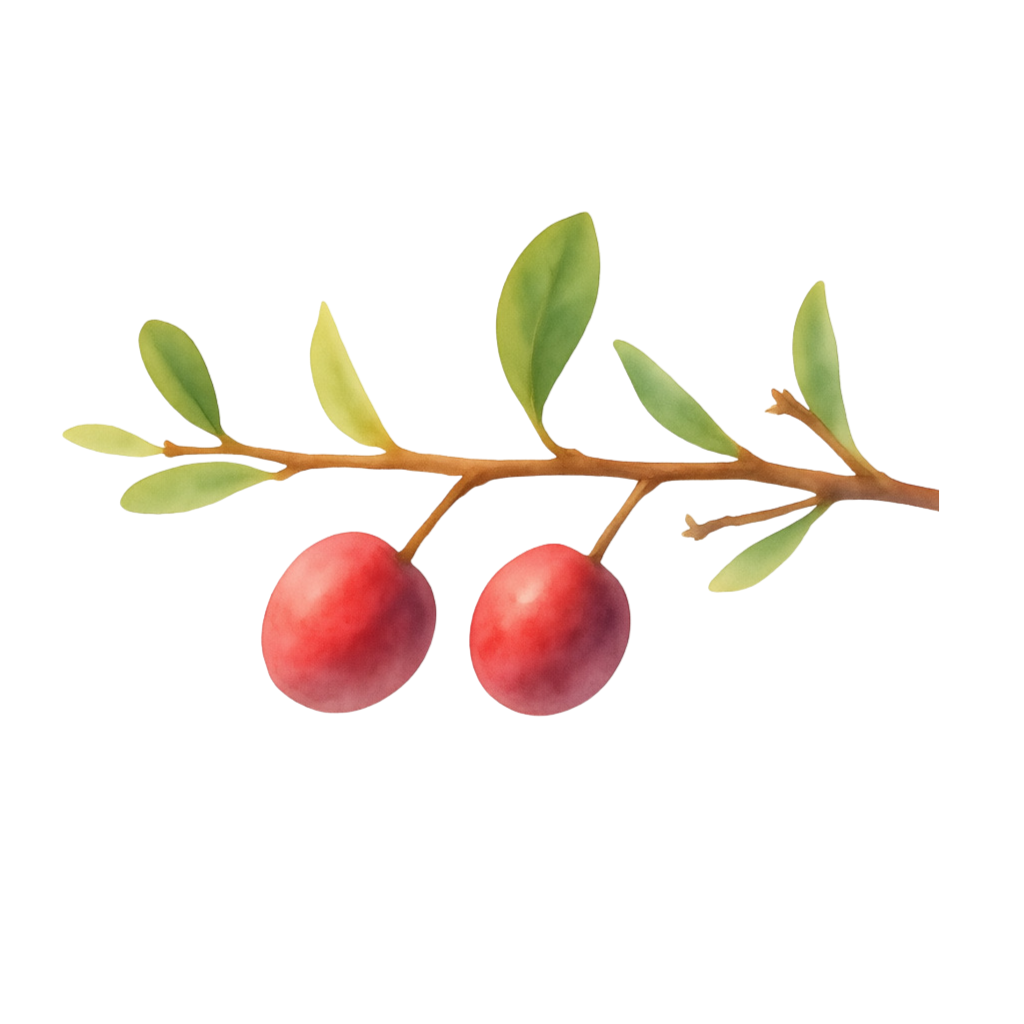
Beach Plum
Prunus maritimaVarieties
Nauset
Premier
Eastham
Squibnocket
Botanical View
- Leaves are alternate, simple, elliptical to ovate, 3-7 cm long and 2-4 cm broad, with a sharply and finely toothed (serrate) margin. The blade is often hairy or velvety on the underside at maturity. Foliage is deciduous.
- A multi-stemmed shrub with several stems arising from the same base; can be trained to a single stem. Bark is thin and smooth when young, with reddish-brown, gray or purple twigs marked by horizontal bands of lenticels; with age the bark darkens and becomes rougher.
- Develops a shallow to moderate, spreading root system that binds and stabilizes sandy soils, making the species valuable for coastal dune stabilization and erosion control. Seedlings invest early growth in root establishment before shoot extension.
- Flowers are borne singly or in small clusters, appearing before or as the leaves emerge. Each flower is about 1-1.5 cm across, with five white petals and prominent yellow anthers; petals often take on a pinkish hue after successful pollination. Flowers are perfect (bearing both male and female organs).
- Hermaphroditic (perfect) flowers, but individual plants are largely self-incompatible (self-sterile). Cross-pollination between separate beach plum plants is required for reliable fruit and seed set.
- Insect-pollinated (entomophilous), depending chiefly on wild bees and other insects to transfer pollen between separate plants. Cold, rainy, foggy or windy weather during bloom suppresses insect flight and can substantially reduce pollination and fruit set.
- Tolerates light (sandy), medium (loamy) and heavy (clay) soils but requires good drainage; naturally adapted to nutrient-poor, saline coastal sands. It does not require sandy soil, and fertile, well-drained soil with a pH of about 6.5-7.0 is considered optimal for cultivated fruit production.
- In commercial culture, fall applications of potassium-magnesium sulfate and spring nitrogen (up to about 40 lb/acre on sandy soils, less on heavier soils) are used, along with foliar boron and zinc chelate. Plants typically require about 1-1.5 inches of water per week; excess moisture during fruit development can cause skin splitting.
- Propagated by seed (requiring cold stratification, e.g. double stratification at about 34-40°F for 3-4 months to break dormancy) and vegetatively by semi-hardwood stem cuttings and, more successfully, root cuttings; also by grafting dormant buds onto rootstocks. Cuttings can be dug and replanted after 1-2 growing seasons; seedlings begin fruiting after about 3-4 seasons and reach maturity in 7-8 years.
- Seed-propagated plants are genetically variable, so seedlings differ in vigor, growth habit and fruit quality; only vigorous seedlings are typically retained or transplanted. This variability underlies the selection of superior clones for named cultivars.
- Several named selections exist, including 'Eastham' (large, well-flavored fruit and heavy cropper), 'Hancock' (early ripening with sweet, juicy fruit), and 'Squibnocket' (high quality and a good sand binder).
- Long harvested from wild coastal populations, beach plum has only recently been domesticated. Since about 2005, growers and researchers (notably at Rutgers/Cornell) have worked to develop it into a commercial crop, selecting superior clones, producing grafted plants, and developing dwarfing rootstocks; improvement of the species remains ongoing.