Back to Fruitpedia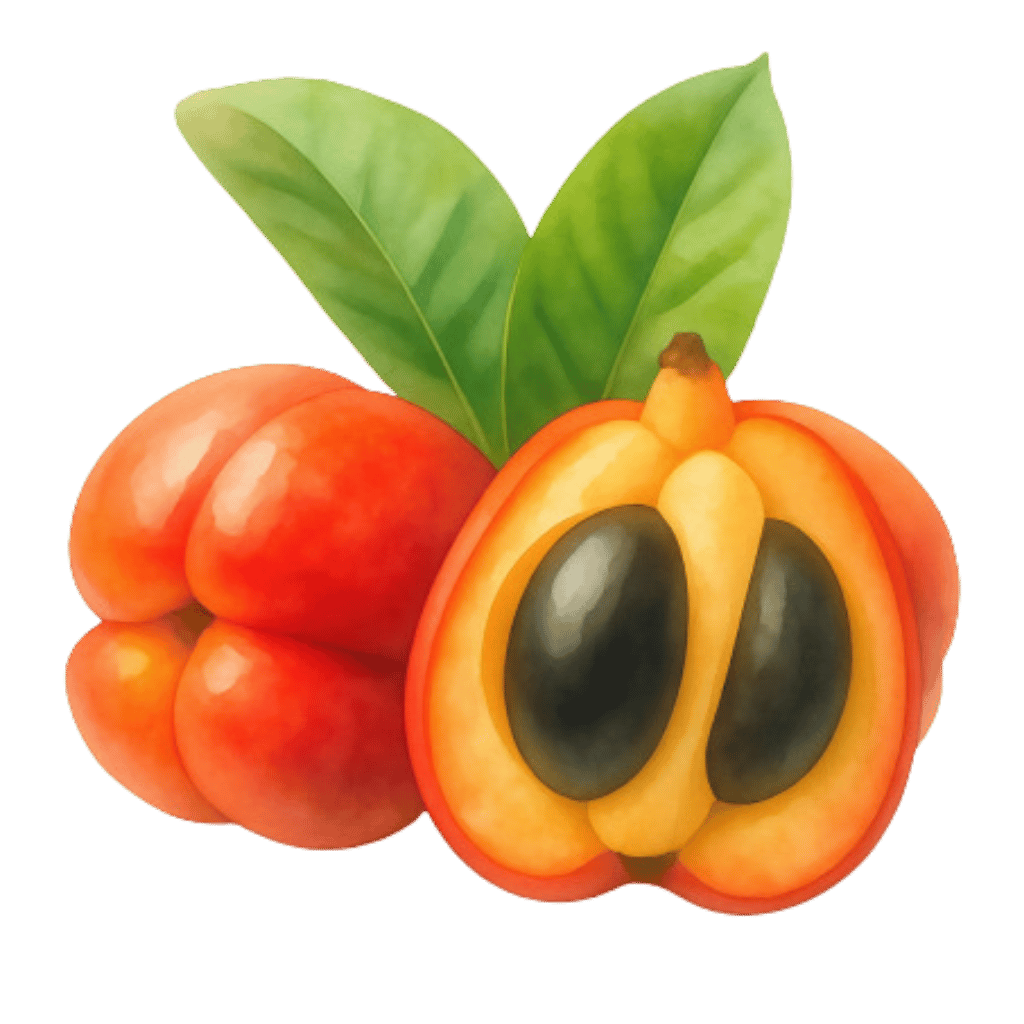
Ackee
Blighia sapidaVarieties
Butter
Cheese
Botanical View
- Leaves are alternate, paripinnate (even-pinnate) compound, 15-30 cm long, bearing 3-5 pairs (about 6-10) of elliptical to oblong-obovate leaflets. Leaflets are leathery, glossy dark green on the upper surface, duller and paler beneath with fine hairs along the veins, and each is roughly 8-20 cm long. The foliage is evergreen and forms a dense canopy.
- The tree has a short, stout, usually straight trunk (up to about 1.8 m in circumference) with smooth, pale grey bark, dividing into spreading branches that form a dense, rounded crown. The wood is a hard, durable hardwood used for furniture and formerly for railway sleepers.
- Sistema radicular pouco descrito na literatura científica disponível. Árvores de floresta nativa frequentemente desenvolvem pequenas sapopemas (raízes tabulares) na base do tronco. A espécie é classificada ecologicamente como não-pioneira tolerante à sombra na fase de plântula, mas não tolera solos encharcados nem alagamento, o que sugere sensibilidade radicular à falta de oxigênio no solo.
- Flowers are borne in fragrant, unbranched to simple axillary racemes (sprays) 7.5-20 cm long. Individual flowers are small (about 5 mm), greenish-white to cream, hairy, and five-petalled. Both bisexual and staminate (male) flowers occur together in the same inflorescence.
- The species is polygamous (andromonoecious), bearing both bisexual (hermaphrodite) and functionally male flowers on the same tree. It is generally reported as not reliably self-fertile, so cross-pollination benefits fruit and seed set.
- The fragrant flowers are insect-pollinated, chiefly by bees; ackee flowers are also a valued source of forage (nectar) for honeybees.
- Grows best on free-draining clay-loam, loam, sandy-loam and loamy-sand soils across a pH range of about 5.5-8.0 (declining above pH 8.5). It tolerates a range of soil types but has poor tolerance of slow-draining or permanently waterlogged soils.
- Em pomares comerciais, mudas jovens recebem adubação a cada 1–2 meses no primeiro ano, seguida por 3–4 aplicações anuais proporcionais ao porte da árvore; da primavera ao verão recomendam-se 2–3 pulverizações foliares anuais de micronutrientes (cobre, zinco, manganês e boro) durante os primeiros 4–5 anos, já que a espécie é suscetível a deficiência de ferro em solos alcalinos ou de pH elevado. Quanto à irrigação, mudas recém-plantadas devem ser regadas no plantio, em dias alternados na primeira semana e depois 1–2 vezes por semana nos meses seguintes; em períodos de seca prolongada (5 dias ou mais sem chuva), árvores jovens (até 3 anos) devem ser irrigadas duas vezes por semana — a árvore adulta é tolerante à seca. Em sistemas tradicionais da África Ocidental (Benin), a principal prática de manejo de fertilidade é a cobertura morta (mulching) e adubação orgânica, adotada por cerca de 18% dos produtores.
- Propagated commercially by seed or by cuttings. Seedling trees are not true-to-type and typically begin bearing about 3-4 years after planting, whereas tip/greenwood cuttings produce lower, spreading trees that can fruit within 1-2 years. Vegetative methods including greenwood cuttings, air layering, and grafting/budding are used to propagate selected types true-to-type.
- Seed-grown trees show considerable variability and do not come true to type, differing in aril colour, texture and quality; because of this, superior selections are propagated vegetatively rather than from seed.
- Cultivated types are broadly divided into two groups by aril character: "Butter" types with a soft, bright/deep yellow aril, and "Cheese" types with a firmer, paler cream-to-yellow aril (the cheese type is favoured for canning). Numerous local selections exist, with some reports of many dozens of named or distinguished cultivars.
- Native to the Guinean forests of tropical West Africa, ackee was carried to Jamaica and the British West Indies in the mid-18th century, reportedly on ships associated with the transatlantic slave trade. The genus name honours Captain William Bligh, who took plants from Jamaica to the Royal Botanic Gardens, Kew, in 1793; the common name derives from the Akan (West African) name "akye/ankye," and the epithet "sapida" refers to the savoury, palatable fruit. Improvement has largely been through selection of superior local types (e.g. Butter and Cheese arils) rather than formal breeding programmes.