Back to Fruitpedia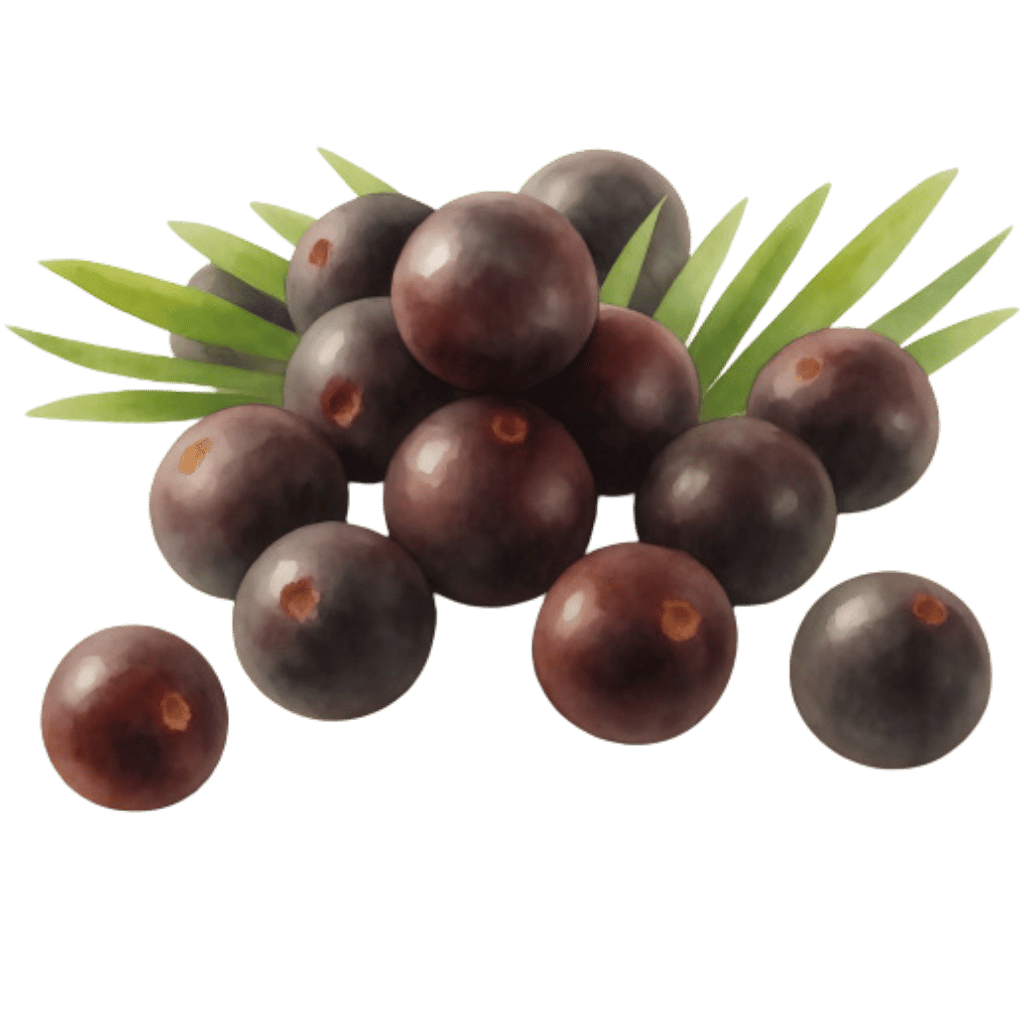
Acai
Euterpe oleraceaVarieties
BRS Pará
BRS Pai d'Égua
Açaí Branco
Açaí Sangue de Boi
Açaí Açu
Açaí Chumbinho
Botanical View
- Folhas pinadas (compostas), longas e arqueadas, de 2 a 3 m de comprimento, dispostas em uma coroa apical com cerca de 8 a 14 folhas por estipe. Cada folha apresenta bainha bem desenvolvida que envolve o estipe (formando a "capa" ou palmito), pecíolo e raque com numerosos folíolos (pinas) lanceolados, longos e pendentes, de coloração verde. Os folíolos inserem-se em um mesmo plano ao longo da raque, conferindo aspecto plumoso e pendular à copa.
- Estipe (caule) do tipo colunar, ereto, cilíndrico, liso e fino, de coloração acinzentada, com anéis (cicatrizes foliares) evidentes, sem ramificações. Mede de 15 a 25 m de altura e 10 a 20 cm de diâmetro. Por ser palmeira cespitoso, emite vários estipes (perfilhos) de idades diferentes a partir da base/touceira, o que permite regeneração contínua e explorações repetidas de palmito e frutos sem morte da planta.
- Sistema radicular fasciculado (adventício), superficial e abundante, típico de monocotiledôneas. Muitas raízes partem da base do estipe acima da superfície do solo (raízes escoras), apresentando lenticelas e aerênquima (pneumatóforos), adaptações que permitem trocas gasosas e a sobrevivência em solos de várzea periodicamente alagados e com baixa oxigenação.
- Inflorescência do tipo cacho (panícula), interfoliar, ramificada, protegida na fase jovem por uma espata; é composta por uma raque principal da qual partem de 48 a 102 ráquilas. Ao longo das ráquilas as flores unissexuais dispõem-se em tríades (díades laterais masculinas e uma flor central feminina), predominando numericamente as flores masculinas (mais da metade). As flores são pequenas, sésseis e de coloração esbranquiçada a arroxeada. Após a fecundação, forma-se o cacho de frutos.
- Espécie monoica e dicogâmica, com protandria (as flores masculinas liberam o pólen antes da receptividade das flores femininas da mesma inflorescência). Essa dicogamia protândrica favorece a fecundação cruzada (alogamia/polinização cruzada) entre estipes e plantas distintas, com predominância de reprodução sexuada.
- Polinização essencialmente entomófila (por insetos). Mais de setenta táxons de insetos foram registrados como vetores efetivos de pólen, incluindo abelhas, moscas (dípteros), besouros (coleópteros), vespas e formigas. As abelhas nativas — tanto solitárias quanto eussociais (p. ex. Melipona, Trigona) — são os polinizadores mais eficientes; o uso de colônias de abelhas sem ferrão (como a uruçu-amarela, Melipona flavolineata) tem sido estudado para incrementar a polinização em cultivo.
- Adapta-se bem a solos de várzea (aluviais), profundos, ricos em matéria orgânica, de textura argilo-siltosa e com boa retenção de água, tolerando solos periodicamente inundados e mal drenados onde outras culturas não vingam. Também é cultivada com sucesso em terra firme (Latossolos), desde que corrigida a fertilidade e suprida a água. Prefere pH ácido, na faixa de 5,0 a 5,5, tolerando de 4,5 a 6,5.
- Em várzea, a fertilidade natural do solo aluvial e as cheias periódicas suprem grande parte da demanda nutricional. Em terra firme, exige adubação (correção do solo com calagem e adubações de plantio e cobertura com N, P, K e micronutrientes) e, sobretudo, irrigação suplementar — planejada para permitir produção na entressafra (janeiro a junho), quando o preço do fruto é mais alto. Cultivares como a BRS Pai d'Égua foram desenvolvidas para plantio irrigado em terra firme.
- Propagação predominantemente sexuada (por sementes), recomendada para plantios comerciais. As sementes têm comportamento recalcitrante (perdem viabilidade se dessecadas ou armazenadas por muito tempo), devendo ser semeadas frescas, após despolpamento; a germinação ocorre em cerca de 20 a 45 dias, com altas taxas quando as sementes estão frescas. A propagação assexuada (vegetativa, por perfilhos) é possível, mas indicada principalmente para estudos de melhoramento genético e não para escala comercial.
- Por ser espécie alógama (fecundação cruzada), apresenta ampla variabilidade genética entre plantas propagadas por sementes, resultando em heterogeneidade de vigor, coloração de frutos, época de produção e rendimento de polpa. Essa segregação motivou os programas de melhoramento (seleção de matrizes e cultivares mais uniformes e produtivas). Existem também variantes de fruto, como o açaí-branco (frutos verdes/esverdeados ao amadurecer) além do tipo comum roxo/preto.
- Cultivares desenvolvidas pela Embrapa Amazônia Oriental: BRS Pará (primeira cultivar recomendada, para produção de frutos em terra firme, mais precoce e produtiva) e BRS Pai d'Égua (cultivar para cultivo irrigado em terra firme, com produção na entressafra e frutos menores). Tradicionalmente reconhecem-se ainda tipos/variedades locais conforme a cor e forma do fruto, como açaí-roxo (comum), açaí-branco, açaí-espada e açaí-tinga.
- O melhoramento genético do açaizeiro é conduzido principalmente pela Embrapa Amazônia Oriental (Belém, PA), a partir de bancos de germoplasma e seleção de matrizes superiores em populações naturais de várzea. Esse programa resultou no lançamento da cultivar BRS Pará (voltada à produção de frutos em terra firme) e, posteriormente, da BRS Pai d'Égua (para cultivo irrigado com produção na entressafra). As linhas de pesquisa incluem seleção para precocidade, produtividade, rendimento de polpa, resistência a doenças e uso de híbridos interespecíficos com E. precatoria.